
June 19, 2026
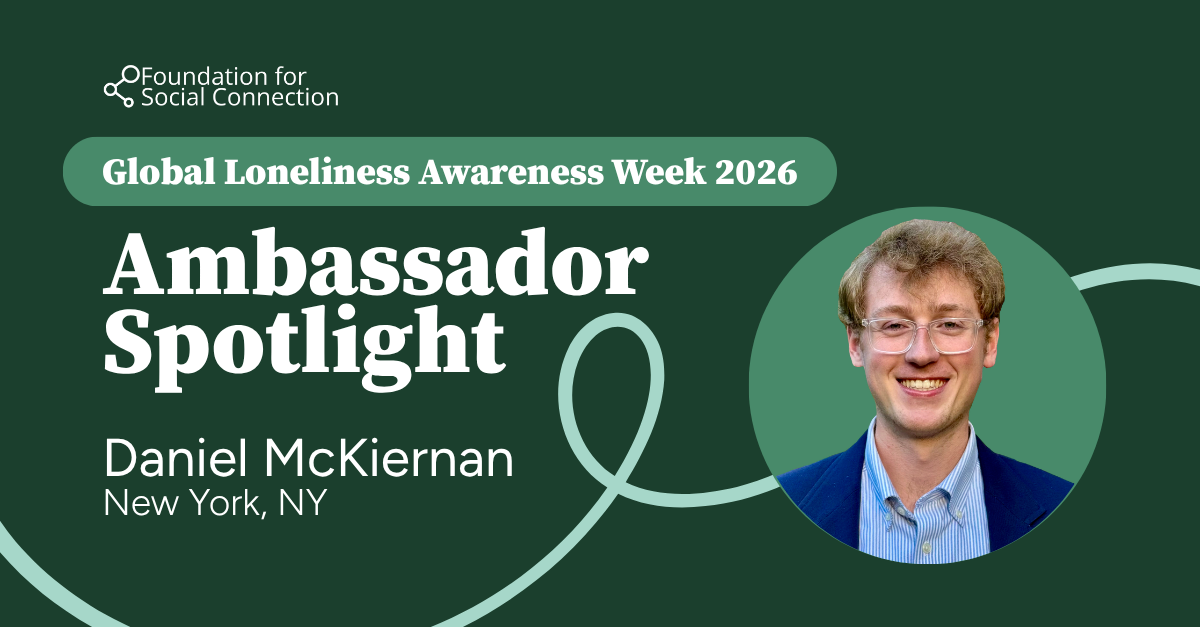
By: Daniel McKiernan, F4SC Ambassador
I don’t know when I first experienced it, but the times when I’ve felt a part of something greater than myself are the best memories I have. Conversely, the times when I’ve lacked connection to a group are among the most difficult periods of my life.
Reaching that sense of belonging takes a long time and a lot of work. The communities you build can quickly fade or slowly disappear, and it’s not always in your control.
Five months ago, I moved to a new city to start my first job as a transportation planner. Although sometimes it feels like my day-to-day work is far removed from enhancing social connection, every transportation investment a community makes is an opportunity to address loneliness and improve lives.
Effective transportation, housing, and land use planning can be the difference between relationships that blossom versus those that never happen or falter as it becomes more difficult to reach one another.
The Foundation for Social Connection’s Built Environment Report and Action Guide for Building Socially Connected Communities are valuable resources for community leaders and planners that want to implement strategies in their communities.
I hope to apply insights gained from these guides’ best practices and case studies in my professional life while contributing to the next NYC regional transportation plan. But I also want to apply the values and ideas discussed throughout the Foundation’s work in my personal life as I try to build my own sense of community.
Sometimes that means stepping up and being the one to organize an event or gathering. Sometimes that means attending community events or volunteering. But I also recognize that I can’t force connections to materialize in my life.
As exciting as this move to a new city was, I found myself once again having to rebuild my world from scratch. I had four existing connections here before moving, and five months in, that number has not increased as much as I hoped.
But one thing I have to remember is just how long relationships take to build. Whenever I feel doubtful that I’ll reach the belongingness I yearn for, I ruminate on the Cameron Winter lyric “Love takes miles, love takes years.”
Building community is hard work, not just in your town or neighborhood, but in your own life. The only thing you can do is to keep showing up, keep looking for new opportunities, and keep nurturing the relationships you do have.
Admittedly, there have been times when I’ve started to feel hopeless in realizing connection both in my life and society as a whole. For all the pessimism on the future I see online, stories like how communities have welcomed and embraced foreign visitors for the World Cup make me feel hopeful again.
I think all people desire belongingness and to be a part of something greater than themselves. We all want to feel connected and that we matter to others. Even if it takes miles, even if it takes years, and even if it requires having to rebuild again while only making incremental progress, forming and deepening connections is one of life’s greatest blessings.
About our ambassador, Daniel
Interdependence is an integral part of being human. Despite our culture’s focus on individualism, we’re all shaped by our relationships. High-quality friendships offer everything from stress relief and emotional support to joy, purpose, and resilience during hard times. To me, friendships are among the most beautiful and complicated parts of life—moments of intimacy and vulnerability with others comprise my most withstanding memories. My interest in social connection grew after experiencing loneliness during my first year of college. Living in an isolated environment made me reflect on how much our surroundings shape our ability to connect, and how easily disconnection can take hold. That experience led me to study urban planning, where I became fascinated by how the built environment influences social well-being. Beyond forming places that are accessible, equitable, and sustainable, planners are responsible for enhancing their community’s social infrastructure. As a Master of City and Regional Planning student, I researched transportation barriers that older adults face in accessing senior centers in North Carolina. My report illuminated the need for non-driving transportation options for older adults in the state, providing data and recommendations to senior centers and the NC Department of Health and Human Services. This project reinforced my belief that access to meaningful connection is not only a personal issue—it’s structural, and one that can and should be addressed through thoughtful policy, design, and storytelling.
Learn more about our Ambassador Program here.