
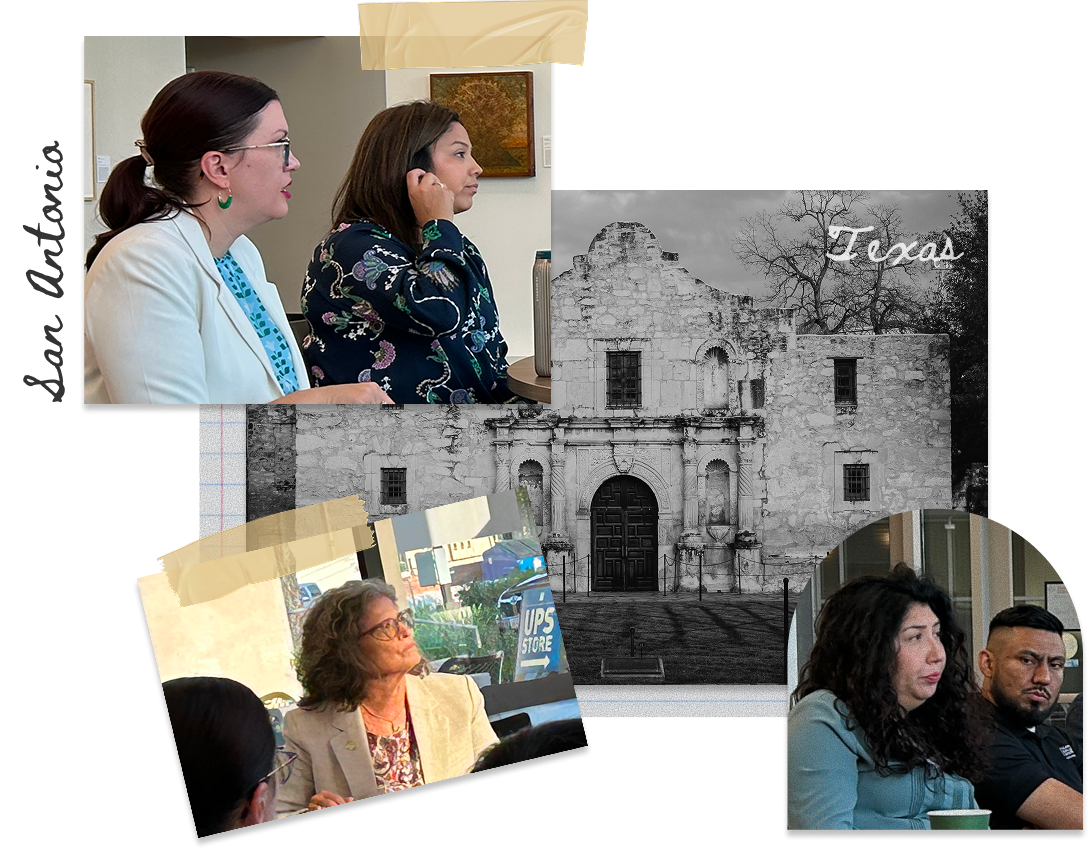

About San Antonio
San Antonio is the second-largest city in the state and a cultural hub known for its rich history, vibrant arts scene, and blend of Mexican, Indigenous, Spanish, and American heritage. Located in south-central Texas along the San Antonio River, it is famous for landmarks such as The Alamo, the River Walk, and its annual Fiesta San Antonio celebration. As of the 2020 U.S. Census, the city had a population of about 1.43 million, with a median age of around 34 years. San Antonio’s population is predominantly Hispanic or Latino (about 65%), followed by White (24%), Black or African American (7%), and Asian (3%) residents.
Community Context
Strengths
San Antonio’s geography, cultural diversity, and strong military presence make it one of the most dynamic and historically significant cities in the American Southwest. Its heritage is rooted in a vibrant mix of Mexican, Indigenous, Spanish, and European influences that shape its food, music, architecture, and festivals, creating a strong sense of identity and belonging. This diversity contributes to a culture of hospitality and resilience, where neighborhoods often organize around shared traditions and values. In 2017, San Antonio became a Compassionate City and is registered with the International Charter for Compassion. All government decisions are made through the lens of compassion. San Antonio also benefits from a growing economy anchored in health care, biosciences, cybersecurity, and tourism, as well as a robust network of community organizations committed to equity and opportunity.
Barriers
San Antonio is among the most economically segregated large American cities. This is the result of historical discrimination, urban development patterns, income inequality, zoning and land use, policy decisions, and social dynamics. These forces have produced neighborhoods that are highly stratified by income, which reinforces cycles of opportunity and disinvestment. This pattern is visible along north/south and east/west axes: northern and central neighborhoods tend to be higher-income, while southern and southeastern neighborhoods often have concentrated poverty.
Challenges & Questions
Leisure and third spaces are not democratized
Access to parks, recreation, and gathering spaces remains tied to economic means, reflecting deeper structural inequities. True community connection requires a landscape of “many small things” – numerous accessible clinics, parks, and community hubs – rather than a few large, centralized amenities.
Better measures of outcomes needed
Due to the fact that 75% of community college students attend part-time and many pursue trade or vocational training, metrics should move beyond 2- and 4-year degree completion to include transfer rates, job placement, and measurable skill gains. Education and workforce readiness are crucial measures of mobility. Such outcomes are seen as “the way out of poverty” and a better reflection of the city’s working-class and nontraditional learner demographics.
Site-specific, accessible data is missing
There is a need for information that captures neighborhood differences and contextual realities like climate, economic patterns, and cultural practices. San Antonio benefits from having “data-dedicated” individuals who make such information available, but broader coordination and alignment are needed to ensure data informs equitable policy and community practice.
Decentralization of government and lack of inclusion are challenges
There is a gap between written policy commitments to inclusion and the lived realities of participation. While community engagement is embedded in many plans, implementation often falls short due to barriers like poverty, childcare, multiple jobs, extreme heat, and transportation challenges. San Antonio’s decentralized governance – 17 school districts and separate transportation authorities – further complicates coordination and public participation.

Promising Initiatives

The San Antonio Community Resource Directory
The San Antonio Community Resource Directory (SACRD.org) is a free, online directory of human service providers that includes nonprofits, congregations, government agencies, and compassionate organizations. Its mission is to make it easy for individuals to find assistance nearby by entering a ZIP code or keyword needs (e.g. food, shelter, healthcare). SACRD also operates special portals such as a “Housing Services” hub with nearly 1,900 resource listings and a mental health services portal with more than 2,200 programs for Bexar County making it a valuable tool linking community members to resources. SACRD is funded by private and public support, including financial backing from the H.E. Butt Foundation and the City of San Antonio Department of Human Services.

The San Antonio Peace Center
The San Antonio Peace Center, originally established as a community-led nonprofit organization, officially made its home at Northwest Vista College (NVC) in 2022. This relocation allowed the center to renew its vision and mission with the support of NVC and the Alamo Colleges District. The center also collaborates with the Alamo Colleges District Office of Art, Culture, and Community Impact, as well as other community groups, to promote peace and justice in San Antonio Alamo Colleges District. The Peace Center offers a variety of resources and training to help individuals, organizations, and communities become more compassionate. It provides a library of books, articles, and other resources on compassion, and offers training on topics such as conflict engagement and transformation, active bystanders, compassionate communities, Applied Suicide Intervention Skills Training (ASIST), and restorative justice.

Community Collaboratives
Community Collaboratives are cross-community action groups addressing community needs through collective action and shared resources. The initiative was launched by former mayor Ron Nirenberg and Faith Liaison Ann Helmke to engage faith-based organizations in civic initiatives, coordinate communication between the city and community groups, and help mobilize resources for neighborhood improvement across shared goals. These collaboratives are typically funded through a combination of government grants, private foundations, and community contributions. They often meet in accessible community spaces such as libraries, recreation centers, faith-based institutions, and nonprofit offices, fostering inclusive environments for collaboration and engagement.

Good Acres Network
Good Acres Network is working with Lutheran Church of Good Shepherd on Goliad Road Community of Promise, a third place that will feature affordable housing, intergenerational connection and economic mobility through program access that considers the social determinants of health. Following a year of community engagement, the initiative is moving towards site concept design and project implementation.
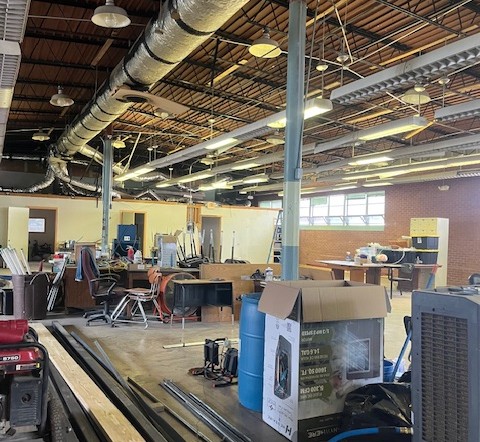
San Antonio’s Quintana Corridor
The revitalization of San Antonio’s Quintana Corridor exemplifies a collaborative approach to promoting economic mobility and strengthening social capital, particularly through the efforts of local leaders and community organizations. Peter Onofre, a retired City of San Antonio employee and current leader at New Life Christian Ministry, has been instrumental in community development initiatives, including his involvement in the RevitalizeSA program, which focuses on enhancing areas like Southcross Boulevard from Quintana to New Laredo Highway. This initiative aims to revitalize underdeveloped corridors by fostering community engagement, economic opportunities, and the renovation of vacant buildings as third places. Local entrepreneurs like Ray Rodriguez and Erica Benavides have opened businesses like Cuba 1918, a Cuban restaurant that serves as a cultural hub and catalyst for neighborhood revitalization. Their initiative employs teens and is in the process of opening a bodega to provide fresh produce to local residents.
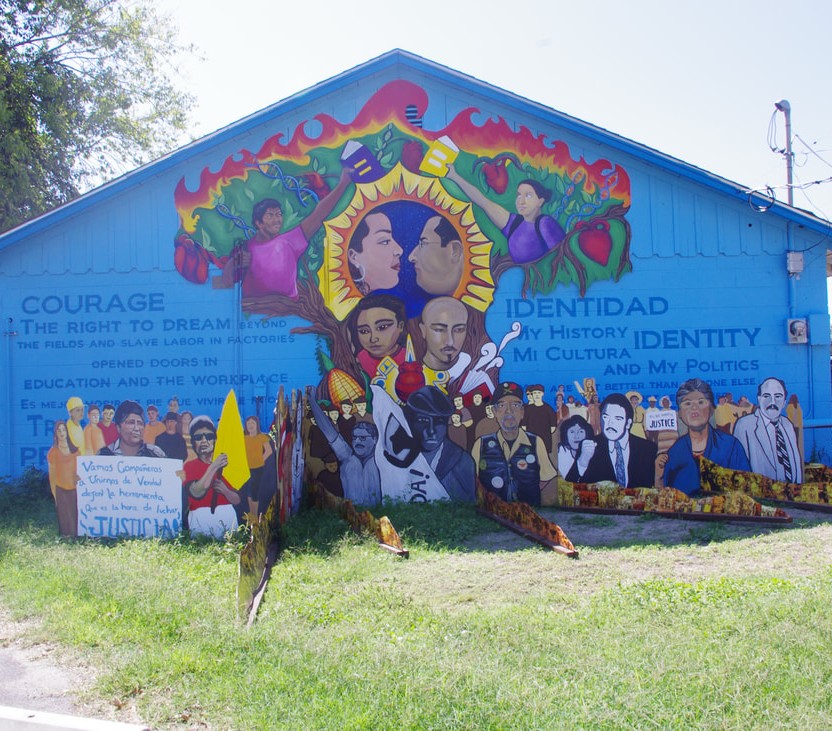
Climate Ready Neighborhoods
The Climate Ready Neighborhoods program, led by the City of San Antonio’s Office of Sustainability, addresses environmental justice issues in neighborhoods such as the South Side. In partnership with organizations like Fuerza Unida, a community group founded by former Levi Strauss workers, the program focuses on heat resilience and climate adaptation. The South San Heat Resiliency Project, for example, has provided cooling units to homes experiencing extreme temperatures and engaged residents in environmental education and infrastructure improvements.
Gatherings
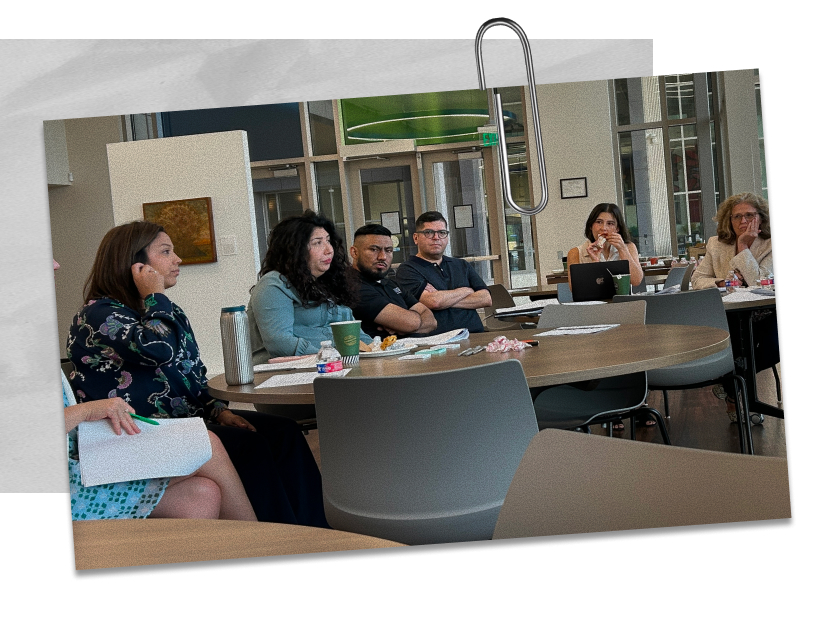
Our team visited San Antonio for a week in late August to host two sessions organized by our Local Advisor, Ann Helmke, who served as the Faith Liaison in the Department of Human Services. The sessions brought together government, civic, and community leaders at the Alamo Colleges District campus. The timing of the visit gave us the opportunity to attend Pathways to Hope an annual free, community-wide conference that brings together mental health professionals, social workers, educators, members of the judicial system, law enforcement, faith leaders, caregivers, and individuals with lived experience to strengthen and improve the mental health care system. It was our first chance to see the level of coordination and partnership that is happening in areas of San Antonio. Following each gathering, participants were eager to meet again to continue this work. The Peace Center offered to host the next gathering and there was a collective energy to determine next steps.

Many participants view authentic engagement as “too hard” or “too time-consuming,” yet argued that it is, in fact, “the shortest route to appropriate solutions.”
Findings
Policies often reinforce inequities.
Equitable policy design should explicitly address economic disparities. For example, local amenities like H-E-B grocery stores function as important third places but also reflect economic stratification, where availability of goods mirrors neighborhood income levels. Similarly, privatized parking fees at parks and splash pads reinforce inequity by limiting access for lower-income families.
Invite community voices into decision making, especially youth.
Engagement must go where people already are, rather than expecting residents to attend government meetings. Participants discussed successful examples, including the Healthy Neighborhoods Program, which applies Asset-Based Community Development (ABCD) principles, and the Encino Park initiative, where adding a playground next to a library created organic opportunities for parents to connect. Engagement is most effective when it includes youth leadership. When half of a group is under 35, collaboration improves, and energy increases.
Authentic engagement reflects the values of leaders.
Local government culture shapes civic engagement outcomes. While some city initiatives model deep listening and co-creation – such as violence prevention strategies where 99% of participants live in the affected areas – these approaches are exceptions rather than norms. Many view authentic engagement as “too hard” or “too time-consuming,” yet argued that it is, in fact, “the shortest route to appropriate solutions.” This cultural tension underscores the need for values-based governance, where public institutions prioritize relationship-building, inclusivity, and community wisdom alongside efficiency.
Accountability, metrics, and transparency build trust.
Participants also highlighted the need for accountability in civic decision-making. Voters who support public bonds (such as for Alamo Community Colleges) are rarely re-engaged or updated on the impact of their investments. Developing metrics to evaluate participatory decision-making, trust in governance, and the effectiveness of civic feedback loops was identified as a key need.
Measurement must reflect a city’s diversity.
Measurement in San Antonio must evolve to reflect the city’s local realities and diverse populations. Participants emphasized the importance of expanding indicators beyond traditional health and economic metrics to include mental distress (14+ days), suicide rates, heavy or binge drinking, disability distinctions (e.g., deafness vs. mobility limitations), and intergenerational connection. These data points reveal nuanced dimensions of wellbeing and belonging that influence social connection.
