
About Hartford
Hartford, Connecticut, the state capital, is known for its rich history, vibrant arts scene, and as a longstanding center of the insurance industry – earning it the nickname “The Insurance Capital of the World.” Located along the Connecticut River in the north-central part of the state, Hartford has a diverse urban population of roughly 120,000 residents. The city’s racial composition is predominantly Hispanic or Latino (about 45%), followed by Black or African-American (around 35%), and White (approximately 15%). Hartford has a relatively young population compared to surrounding areas, with a median age of about 31 years, reflecting a mix of working families, students, and a growing immigrant community that contributes to the city’s cultural vibrancy.
Community Context
Strengths
Hartford’s greatest strengths lie in its diversity, cultural richness, and institutional assets. The city is home to major insurance and healthcare companies, several universities, and renowned arts and cultural institutions such as the Wadsworth Atheneum and the Bushnell Center for the Performing Arts. Its strong immigrant communities contribute to a dynamic mix of languages, traditions, and entrepreneurial energy. Hartford also benefits from its compact size and central location within Connecticut, making it a hub for regional employment, education, and transportation.
Barriers
Hartford faces concentrated poverty, limited economic mobility, and deep racial and spatial inequities between the city and its surrounding suburbs. Many residents face barriers to quality education, stable employment, and affordable housing, while public transportation gaps make it difficult to access regional job centers. The city’s high tax burden and fiscal instability also constrain investment in essential services and infrastructure. Together, these challenges reinforce cycles of disconnection and limit residents’ ability to fully participate in and benefit from Hartford’s economic and civic life.
Challenges & Questions
Equity and inclusion are needed in development
Hartford must ensure that revitalization projects, especially in the North End, reflect community priorities and benefit long-term residents rather than displacing them. How can new investments be distributed equitably across neighborhoods?
Efforts are required to build and sustain trust
The city must move beyond consultation to co-creation, where residents help define priorities, and not just react to plans. How can strategies best rebuild trust among residents who feel unheard or fatigued by past engagement efforts (“we told you this before…”)?
What indicators can meaningfully capture social capital, belonging, and civic participation alongside economic outcomes? How can the city and partners better coordinate and share data to track long-term community wellbeing and connection?
Barriers to access and participation persist
There are practical barriers that exist, such as language, transportation, technology, and time constraints that prevent residents from engaging in civic and community activities. Can city departments and community-based organizations better coordinate translation, outreach, and flexible scheduling?
Economic mobility and ownership need to be balanced with development
Policies and partnerships can expand homeownership, small business ownership, and wealth creation within historically disinvested neighborhoods, but how can Hartford balance development with affordability and community ownership of assets?
Governance and coordination should be guided by community vision
With multiple departments, Neighborhood Revitalization Zones (NRZ), and regional layers, it is challenging for Hartford to streamline governance to improve coordination, efficiency, and accountability. Could a unified “North Star” or community vision guide efforts across agencies and neighborhoods?
Improved safety, transportation, and public spaces could better connect residents
Hartford is known for its parks (Frederick Law Olmsted, born in Hartford, designed the city’s park system and landmarks). How can Hartford make parks, streets, and public areas safer and more inclusive, particularly given concerns about street crime, ATVs, and speeding? How can public transit and pedestrian access better connect residents to opportunity hubs and community spaces?
Promising Initiatives
Keney Park Sustainability Project
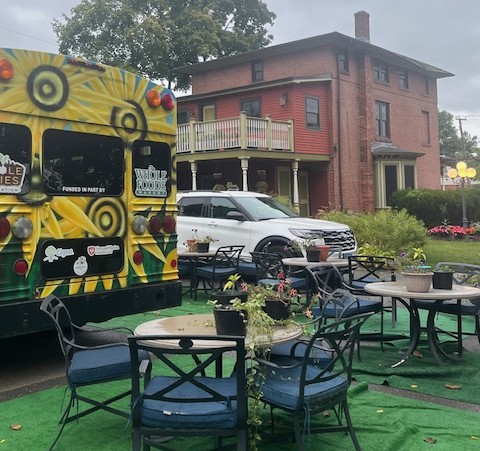
The Keney Park Sustainability Project (KPSP) serves as a vibrant third space for connection, learning, and community empowerment. Partnering with organizations such as the University of Connecticut, the Hartford Land Bank, Hartford Public Schools, and local nonprofits, KPSP transforms vacant lots into productive urban farms, provides youth job training, and offers hands-on programs in environmental stewardship, urban agriculture, and wellness. The project integrates education, food access, and sustainability into community life with grant funding from foundations and state agencies. As a gathering place, Keney Park fosters belonging and cross-cultural connection among residents, students, and institutions, bridging socioeconomic divides while cultivating both social capital and environmental resilience in Hartford’s North End.

Hartford Public Library
Hartford Public Library (HPL) serves as a vital community hub, fostering connection, learning, and civic engagement across Hartford. With nine service locations and a mobile service, HPL partners with a diverse array of organizations, including Hartford Public Schools, the City of Hartford, local health providers, and cultural institutions, to offer programs that promote literacy, workforce development, health and wellness access, and social inclusion. Initiatives like The American Place build networks of trust between immigrants and the broader community. HPL’s outreach efforts, such as the Library on Wheels program, extend services to neighborhoods with limited access to resources. Additionally, HPL collaborates with the University of Connecticut (UConn) to utilize HPL’s downtown location as the library location for the UConn Hartford Campus, including a dedicated student floor within the main library building. This partnership offers UConn students access to academic resources, study spaces, and research support, while also integrating them into the broader community of library users. Through these collaborations, HPL not only provides access to information and technology but also strengthens social infrastructure, empowering residents to actively participate in civic life.

Real Art Ways
Real Art Ways (RAW) in Hartford is a dynamic nonprofit arts organization that doubles as a third space for creative connection, learning, and community building. Founded in 1975, RAW presents visual art, film, music, and live performance, literary events, public art and youth education programs, welcoming people from diverse backgrounds to engage around new ideas. Its space, repurposed from an Underwood Typewriter facility, serves not just as a gallery and cinema, but as a gathering place, hosting events like “Creative Cocktail Hour,” “CT Lit Fest,” and public art projects, which encourage interaction, belonging, and cross-cultural exchange. RAW is currently undertaking a major expansion (renovating exhibition spaces, adding a café and performance areas, increasing capacity for education) made possible by public grants, private donations, and tax credits, which will enhance its capacity to serve as a hub for cultural learning, conversation, and social connection.

Swift Factory
The Swift Factory, housed in a building that was the location for M. Swift & Sons gold leaf manufacturing from 1887 to 2005, now serves as a hub for entrepreneurship, job training, community services, and local resident engagement. The building was donated to Community Solutions by the Swift Family and has been redeveloped into a multipurpose facility as an initiative of the North Hartford Partnership (NHP) featuring incubator kitchens for small food businesses, affordable office space, community organizations, and services like early childhood education. The project aims to promote economic mobility by creating local jobs, supporting Black-, women-, and minority-owned enterprises, and strengthening social capital through collaborative workspaces, learning hubs, and community gathering spaces. Community Solutions played a developer and catalytic role in creating the Swift Factory. NHP is the community‐based steward and operator managing ongoing local programs, spaces, and housing work in North Hartford, while Community Solutions acted as the driving force behind redevelopment, funding, and structural transformation of the Swift Factory as part of its wider mission in urban revitalization and social systems change.

Community First School
Community First School (CFS) in North Hartford is a community-anchored K–5 school founded in 2020 by Timothy Goodwin and local residents to serve families in the city’s federally designated Promise Zone. Rooted in a whole-family, relationship-based, and place-based model, CFS partners with many local organizations to address academic, social, and emotional needs both in and beyond the classroom, such as North Hartford Partnership, Hartford Public Library, Community Renewal Team, Build A Better You Family Services (licensed mental health provider), Ebony Horsewomen, Nia Arts, The Artists Collective, Keney Park Sustainability Project, and Connecticut Department of Energy and Environmental Protection. Through these collaborations, the school offers wraparound supports, family engagement programs, and enrichment opportunities that strengthen trust, belonging, and community voice. Funded by local foundations, nonprofit partners, and a large number of committed individual donors and volunteers, Community First School serves as both an educational institution and a third space for connection, linking families, educators, and community organizations to help children thrive and expand opportunity in Hartford’s North End.
Southside Institutions Neighborhood Alliance
Southside Institutions Neighborhood Alliance (SINA) is a collaborative nonprofit in Hartford formed in 1978 by three anchor institutions and now run as a partnership of Hartford Hospital, Connecticut Children’s Medical Center, and Trinity College. It works to revitalize South Central Hartford neighborhoods including Frog Hollow, Barry Square, and South Green. SINA carries out programs in housing (both affordable rentals and homeownership), public safety, youth leadership, economic development, employment (“Walk to Work”), and community voice (through the REACH committee and neighborhood beautification) to build both material opportunity and social connection. It partners with local nonprofits, residents, and civic stakeholders to deploy clean-ups, murals, resident volunteer efforts, and input into planning, which help create shared spaces, strengthen neighborhood identity, and foster trust. Funding comes from its anchor members, grants from foundations, public agencies, and real estate development income, allowing it to both operate services and invest in physical improvements that encourage resident engagement and long-term investment.
Gatherings
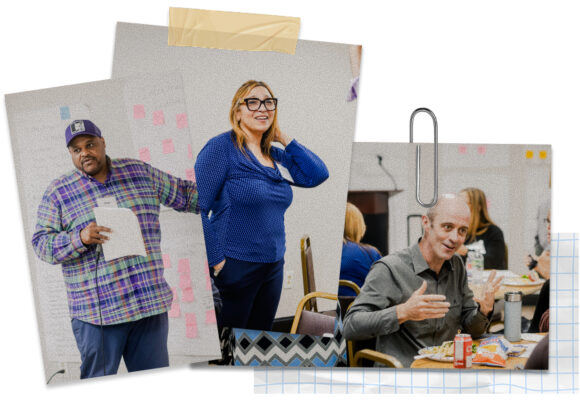
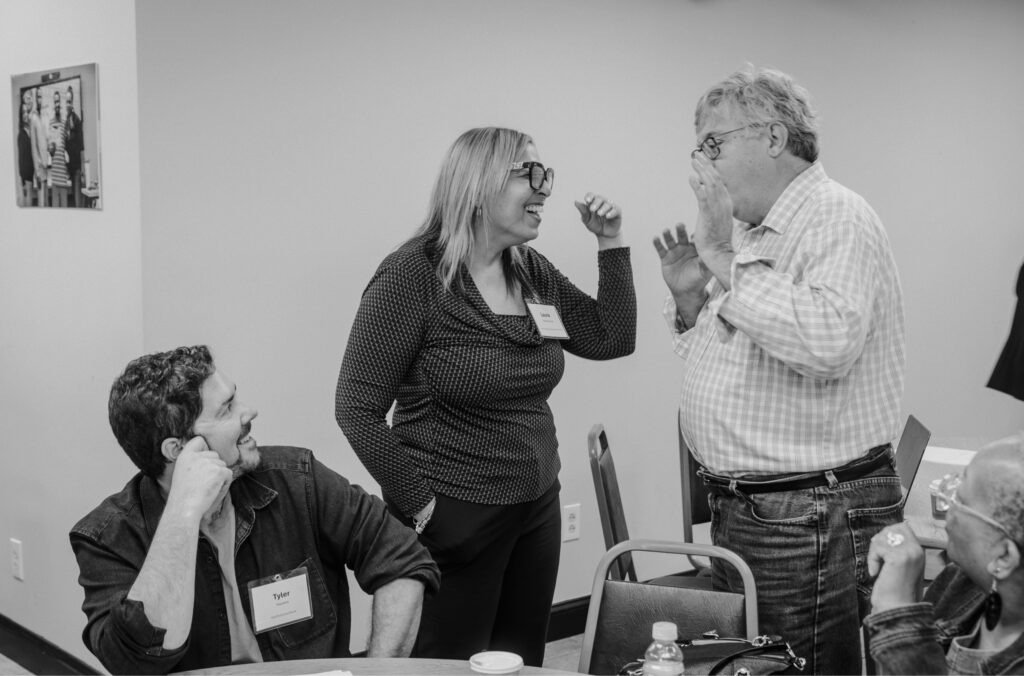
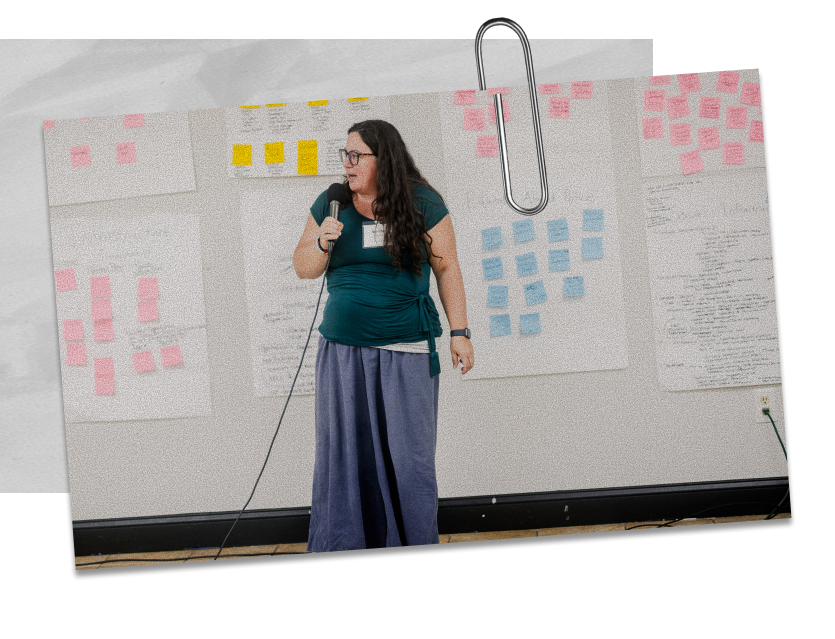
Advisor Rick Brush, founder of Transform Together, urged our team to connect our gathering to an existing community session – the Hartford Neighborhood Development Support Collaborative (HNDSC) convened quarterly by the Local Initiatives Support Corporation (LISC) Connecticut – and to include a training session for attendees. The LISC team, led by Debi Martin and Franches Garay, coordinated our biggest gathering – attended by nearly 100 local leaders. We had planned to include Public Narrative training during the session to share community organizing techniques, when the local team cautioned us that the sessions needed to be led by someone local who looked like our attendees and is trusted. This suggestion helped us avoid a common mistake made by “outside” organizations. Hartford organizers Rev. A.J. Johnson, from the Center for Leadership and Justice and Brother Kelvin LoveJoy from LoveJoy & Associates led a full organizing session that ended with rousing applause. Participants agreed to hold one-on-one relational meetings to expand and deepen social connections and collective action across Hartford neighborhoods, and to share their progress at the next quarterly HNDSC meeting.

There is growing recognition that trust and familiarity – built through collaboration – are prerequisites for lasting change.
Findings
Strong civic and social infrastructure provide community anchors.
Hartford has an abundance of trusted community hubs – libraries, churches, recreation centers, and parks. The Hartford Public Library and its branches (e.g., youth media lab, the American Place for immigrants) serve as safe, inclusive third places.
Faith-based spaces (more than 250 churches in 18 square miles) act as natural gathering points and potential partners in building social capital through gardens, literacy programs, and youth leadership. Parks, senior centers, and community hubs like Semilla Cafe + Studio, Trinfo Café, and Wilson Gray YMCA provide key sites for connection, resources, and recreation. See more of the area’s third places in this report by Capitol Region Council of Governments.
Collaboration and partnerships lead to lasting change.
Hartford’s civic ecosystem includes a range of collaborations between city agencies, community-based organizations, and residents. The North Hartford Triple Aim Collaborative provides an ongoing, shared “table” for relationship building that has strengthened multi-stakeholder partnerships. City initiatives such as Love Your Block connect residents and municipal leaders. Hartford Next brings together the city’s 13 Neighborhood Revitalization Zones (NRZs). System-building efforts such as North Hartford Ascend show the power of place-based partnerships linking schools, service providers, and residents. Hartford Opportunity Youth Collaborative (led by Capital Workforce Partners), The Open Hearth and Community First School all demonstrate the importance of aligning resources to promote belonging, meaning, wellbeing, and purpose. There is growing recognition that trust and familiarity – built through collaboration – are prerequisites for lasting change.
Faith, culture, and third spaces serve as civic connectors.
Faith communities and local cultural assets are central to Hartford’s identity and civic life. Churches, community gardens, and cultural festivals (e.g., Jerk Festival, CapFest, Panda Festival) nurture belonging and intergenerational engagement. Investments in Dunkin’ Donuts Park, Keney Park, and Pope Park contribute to civic pride and shared identity, but concerns persist around equitable access and distribution. Arts and culture programs, like RiseUP for Arts and Real Art Ways, connect creative expression to community storytelling and social inclusion.
Collaboration and partnerships lead to lasting change.
Hartford’s civic ecosystem includes a range of collaborations between city agencies, community-based organizations, and residents. The North Hartford Triple Aim Collaborative provides an ongoing, shared “table” for relationship building that has strengthened multi-stakeholder partnerships. City initiatives such as Love Your Block connect residents and municipal leaders. Hartford Next brings together the city’s 13 Neighborhood Revitalization Zones (NRZs). System-building efforts such as North Hartford Ascend show the power of place-based partnerships linking schools, service providers, and residents. Hartford Opportunity Youth Collaborative (led by Capital Workforce Partners), The Open Hearth and Community First School all demonstrate the importance of aligning resources to promote belonging, meaning, wellbeing, and purpose. There is growing recognition that trust and familiarity – built through collaboration – are prerequisites for lasting change.
Resident engagement leads to better policies.
There is a strong push for participatory governance and accountability. Residents and partners called for City Council and policymakers to “take meetings to the neighborhoods” and engage directly with residents. Some also called for more investment in community organizing. Efforts like Hartford Decide$ and Know Thy Neighbor demonstrate the potential for participatory budgeting and community-led dialogue. The City’s Office of Community Engagement, resident-led groups like Community Action Task Force (CATF) and the Hartford Commission on Food Policy are working in various ways to improve communication, data sharing, and collective action that connect community priorities to policymaking.
Shared data can lead to greater accountability.
While Hartford has many community initiatives, measurement systems are fragmented. There are few consistent indicators of social connection or trust tracked alongside economic outcomes.
Data is often collected by individual organizations but not aggregated citywide or over time. Hartford Data Collaborative is a notable example of moving in the right direction. There is a growing call for shared data repositories, storytelling alongside quantitative metrics, and community access to information for transparency and accountability.
Revitalization has benefits, but also concerns.
Revitalization efforts like the new Barbour Street Library, the Arrowhead Gateway development plan, and Market Street development show promise, but residents express concern over equitable benefit and communication. Affordable homeownership is a top community priority; ownership is viewed as key to wealth creation and connection. Residents are eager for inclusive development that supports small business ownership, mixed-use spaces, and equitable investment across neighborhoods.
